Kaiser Permanente and the Alliance of Health Care Unions

LMP Processes

Frequently Asked Questions About Health Care Reform

Deck: 
Here's how to answer some common questions

Story body part 1: 

Q: What is health care reform?

A: The term “health care reform” refers to the Affordable Care Act—the federal law that was passed in March 2010—as well as any state laws passed to put it in place. These laws are intended to help more people get affordable health care coverage and receive better medical care.

Q: What are the Health Insurance Marketplaces?

A: Marketplaces, sometimes called “Exchanges,” will be state- or federal- run online markets where many people can buy health care coverage. It will be available to people who are uninsured or who buy insurance on their own. They will be able to compare and choose health plans offered by private companies, get answers to questions, and find out if they are eligible for financial assistance or special programs. The marketplaces will also operate a Small Business Health Options Program (SHOP) where small employers can purchase coverage for their employees. Coverage purchased there will be effective Jan. 1, 2014, or later.

Q: Does a person have to buy from the marketplaces?

A: No, not necessarily. The marketplace is just one of the ways people can shop for health coverage. People can still get coverage through their employer or directly from an insurance company. A member will have to buy coverage through the Marketplace to apply for subsidized coverage, however.

Q: Will Kaiser Permanente coverage be available through the marketplaces?

A: Kaiser Permanente intends for our plans to be available in the marketplaces, but individuals don’t have to buy from the marketplaces. A person can still buy directly from Kaiser Permanente or continue to get coverage through his or her employer.

Q: Can anyone get health care coverage?

A: Yes, the ACA requirement regarding guaranteed availability applies to all individuals. Insurance companies can no longer deny coverage because a person has a medical condition, and no one has to pass a medical exam to qualify for coverage.

Q: Who has to buy health insurance?

A: The Affordable Care Act requires most U.S. citizens and those lawfully present to have a basic level of health coverage starting Jan. 1, 2014. There will be some exceptions for financial hardship, religious objection, immigration status and certain other circumstances.

Q: What if a person can’t afford to buy health care coverage?

A: The federal government may provide financial assistance to help a person pay for health coverage if he or she can’t afford it. This is usually determined by a person’s income level and family size. Individuals will be able to find out if they qualify for financial assistance when the Health Insurance Marketplaces launch in October.

Q: What can frontline workers do to prepare for health care reform?

A: Take advantage of every opportunity to become informed. Attend trainings (on KP Learn or in person), read communications and ask questions. Visit kp.org/reform, and refer friends, family and members to the site, too.
TOOLS

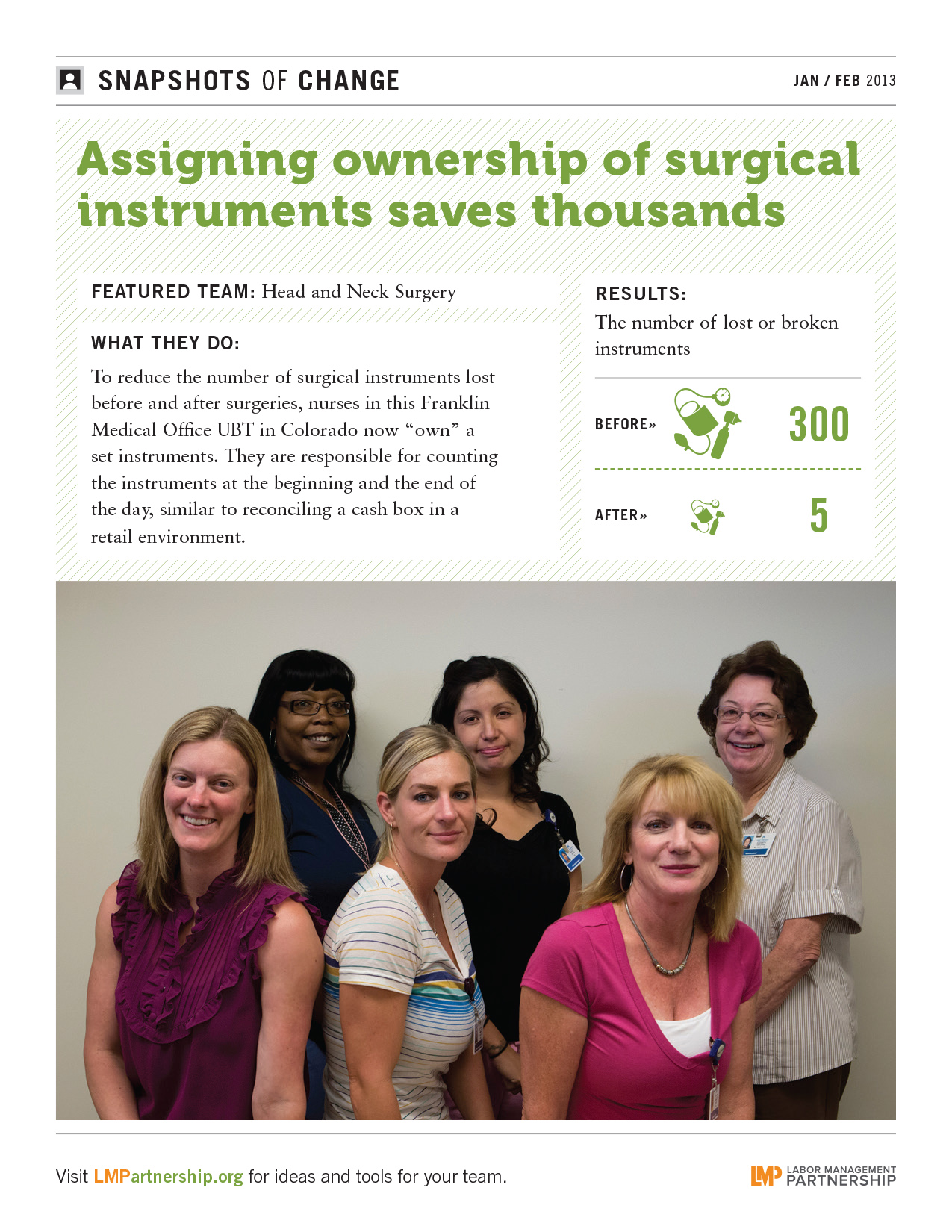
Poster: UBT Ends Losing Streak

Format:
PDF (color and black and white)

Size:
8.5” x 11”

Intended audience:
Frontline employees, managers and physicians

Best used:
Hang this poster highlighting a Colorado team's better way to keep track of surgical instruments—and save thousands of dollars—on bulletin boards, in break rooms and other staff areas.


Related tools:

Six Tips for Successful Interest-Based Problem Solving

Story body part 1: 

Michael Hurley was the education director for the Coalition of Kaiser Permanente Unions for several years, and he and his team designed many of the LMP programs used to support unit-based team education. 

1. Know why we use interest-based problem solving

Interest-based problem solving (IBPS) is a collaborative approach to solving problems, a process for negotiating differences amicably without giving in. When you’re in an ongoing partnership—whether it’s a labor-management partnership or, say, a marriage—you likely have multiple objectives you want to satisfy when resolving differences. Those include not only the desire to solve the problem in a way that meets your needs, but also to solve it in a way that doesn’t cost too much (in time, money or emotional wear and tear), and that leaves the relationship intact or even improves it. Because down the road, you know you’re going to be working together again to solve the next problem that crops up.

2. Understand key terms

Four words are at the heart of the interest-based process. The issue is the problem or subject area to be addressed. A position is a proposed solution. The interest is the underlying need, motivation or concern that may have to be addressed in order to reach a solution; you can tell an interest in part because there is usually more than one way to satisfy it. An option is a potential way to address the issue, in whole or in part.

Your position tells us what you want but not necessarily why you want it.

  • A spouse wants to put 5 percent of income into a retirement savings account.
  • A parent wants a child in bed by 9:30 on a weeknight.
  • A union wants a 3 percent across-the-board wage increase in collective bargaining.

Your interests tell us what is important to you.

  • A spouse wants enough saved to have a comfortable retirement.
  • A parent wants a child to be well rested for school the next day.
  • A union rep wants a compensation package for members that aids recruitment and retention.

3. Ask: Is that ‘interest’ really a position?

What do you do when you’ve got a position masquerading as an interest? Usually, you can get to the interests that underlie a position if you listen carefully and ask the right questions. Find out the needs and concerns behind the position. Here’s an example:

Statement by wife: “I hate living in Los Angeles. We should move to Oregon.”

Reaction to self: “Great, here we go again.”

Question to wife: “Why should we move to Oregon?”

Answer: “We’re in a rut. We’ve lived our whole lives here. I’m tired of it.”

Question: “What else appeals to you about Oregon?”

Answers: “The weather is too hot here, and we spend so much time stuck in traffic. We have to do all our exercising here at the gym. Oregon is cooler and there are prettier roads for biking. We can get to the woods and good hiking faster. People are more relaxed there. “

Interests: Change in weather, less traffic, easier access to uncrowded outdoors, less stress.

By starting with a discussion of interests, the parties can talk about what is important to them without staking out what they want the outcome to be. It opens the door to collaborative problem solving, as opposed to competition or compromise. 

4. Agree on the information

Find agreement on what data to collect and how to collect it, vet it and report it—or you’ll just argue about the data. 

5. Make an action plan

Create an action plan for turning solutions into reality. Be clear on who’s accountable for what. Establish a timeline. 

6. Set ground rules

Remember, interest-based processes don’t always work. In my experience, they have the best chance for success if the parties agree to:

  • Focus on the issue, not personalities.
  • Share information fully and early.
  • Listen actively.
  • Work hard to meet interests, not sell positions.
  • Be open to options.
  • Look for ways to build trust.

TOOLS

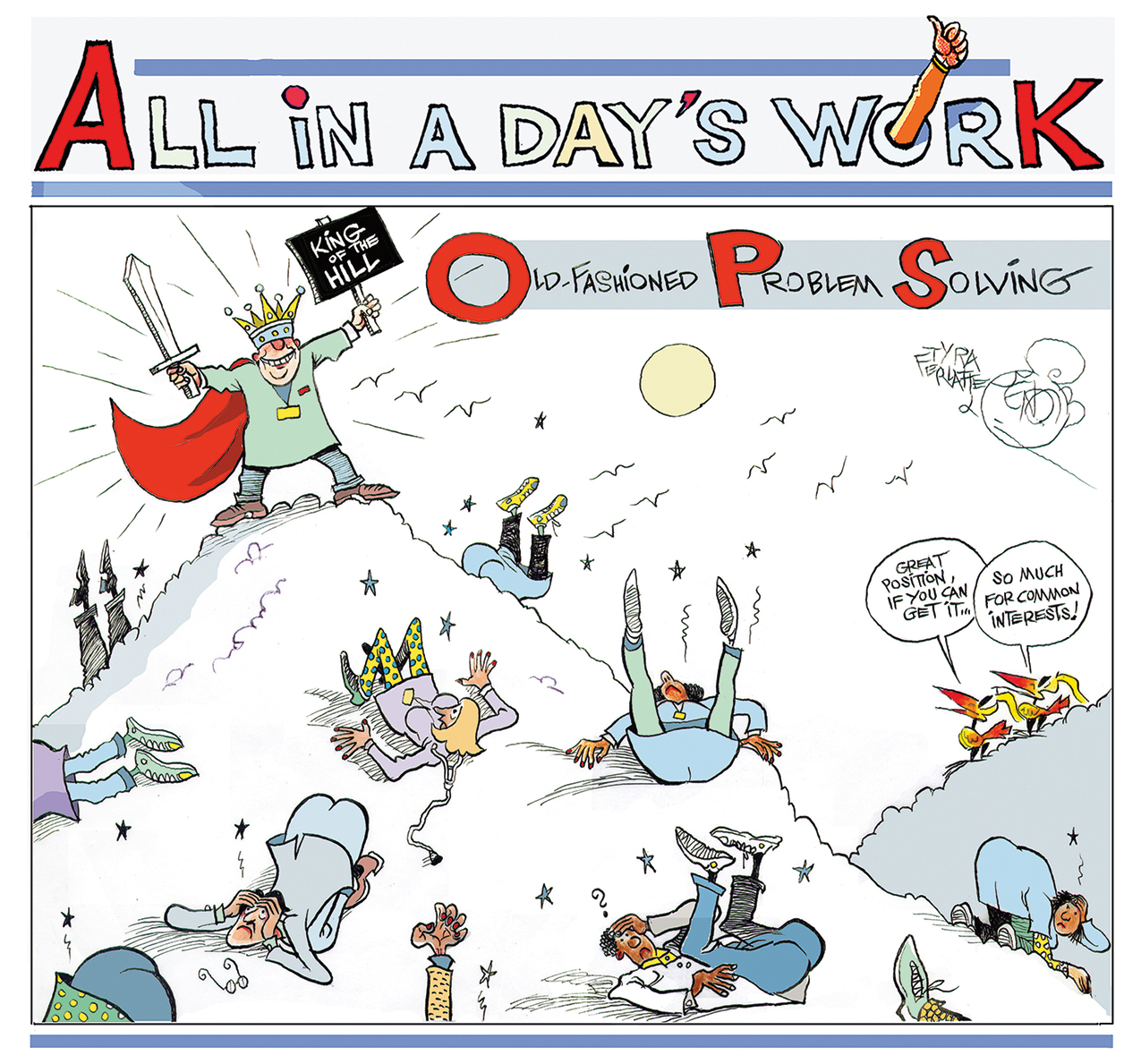
All In a Day's Work: Old-Fashioned Problem Solving

Format:
PDF (color or black and white)

Size:
7.25" x 7.25" (prints out on 8.5" x 11") 

Intended audience:
Anyone with a sense of humor

Best used:
Post on bulletin boards, in your cubicle or in emails to share a gently humorous look at how we solve problems
—and the value of interest-based problem solving. Have fun!


Related tools:

TOOLS

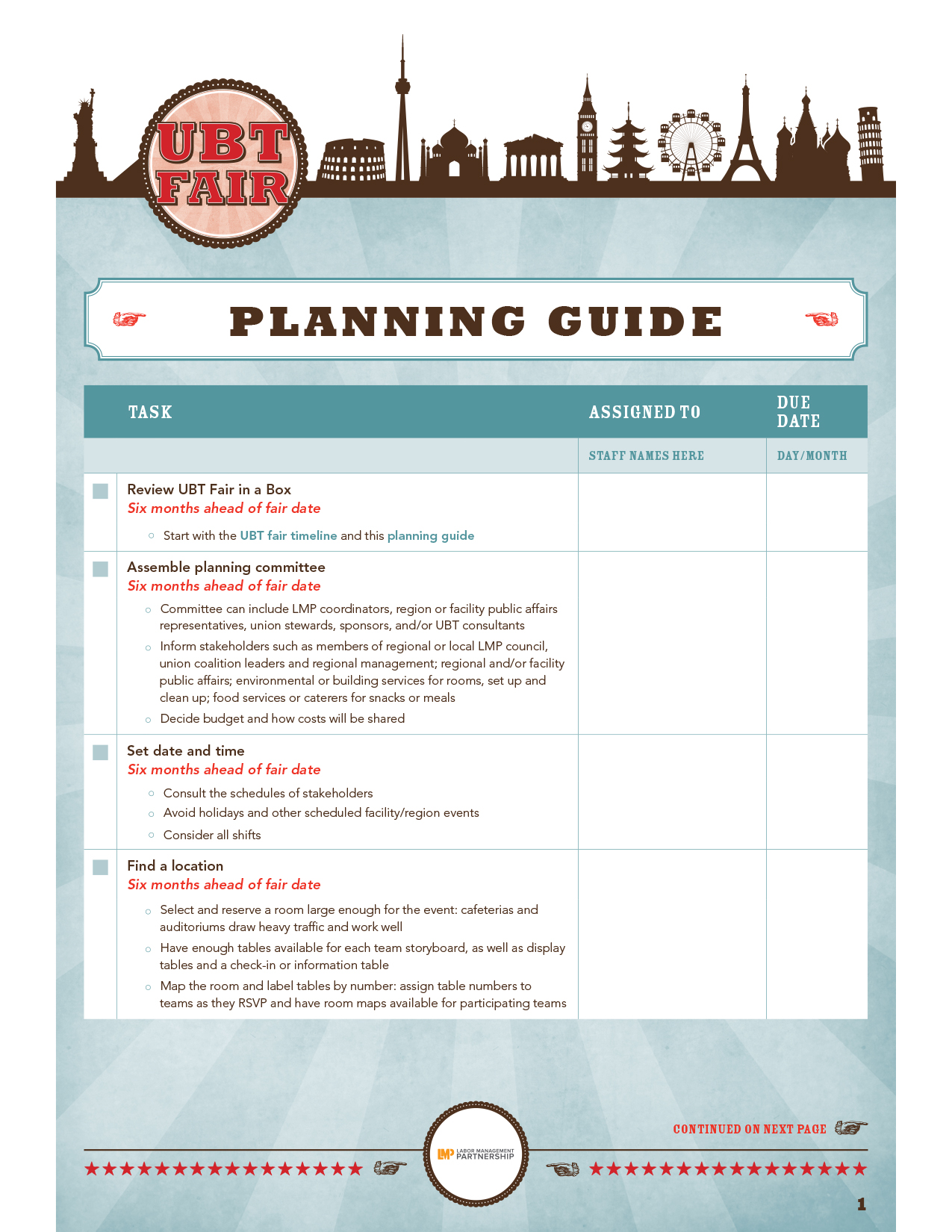
UBT Fair Planning Guide

Format:
PDF

Size:
4 pages, 8.5” x 11” 

Intended audience:
UBT consultants, public affairs staff, regional and facility-level LMP staff, and others involved in planning a UBT fair 

Best used:
Download and review this detailed guide as the first step in planning a UBT fair at your region or facility. Topics include assembling your committee, setting the date and location that will attract the most people to your event, mobilizing teams and presenters, and ensuring your fair goes off without a hitch. Includes space to write in due dates and names of staff assigned to each task.

For more tools, please visit the How-To Guide: UBT Fair in a Box.


Related tools:

Pages

Subscribe to RSS - LMP Processes