Kaiser Permanente and the Alliance of Health Care Unions

Program-wide

TOOLS

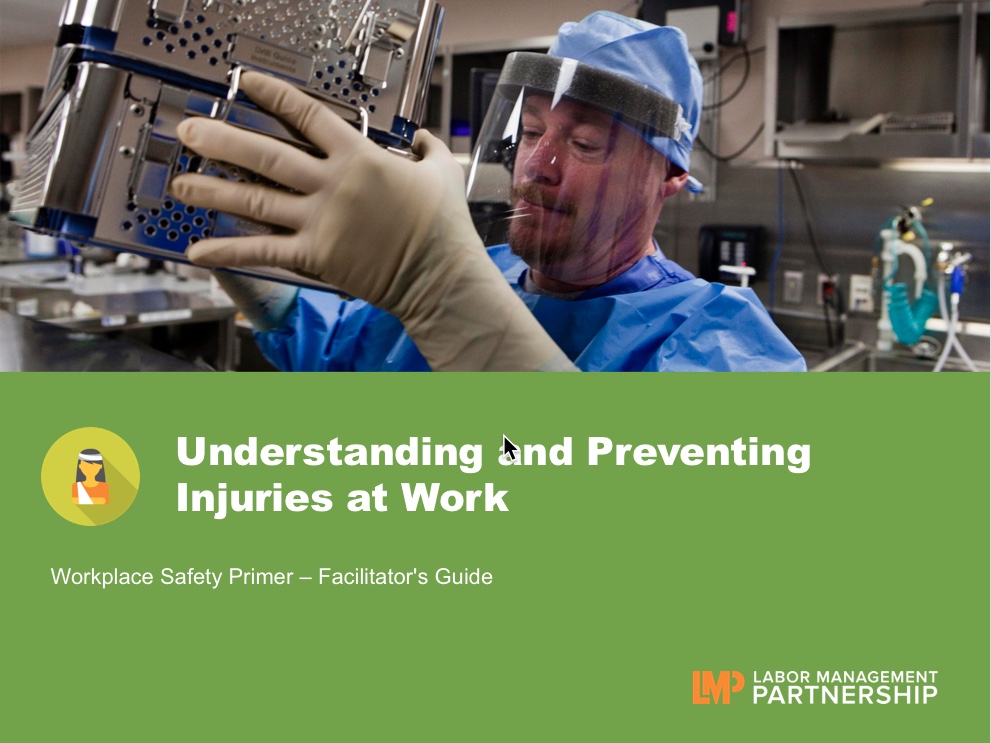
Workplace Safety Primer Facilitator's Guide

Format:
PowerPoint

Size:
24 pages, 8.5" x 11"

Intended audience:
Workplace safety co-leads, safety committee members, safety champions, and frontline workers and supervisors.

Best used:
This companion to the Workplace Safety Primer helps frontline leaders teach others key principles of workplace safety and accident prevention.

Related material:
Workplace Safety Primer
 

Related tools:

Tips for Flu Prevention

Deck: 
How to protect yourself and our members from this virus

Story body part 1: 

When flu season arrives, it’s important to stay well. As a matter of patient and workplace safety and professional pride, we can take steps to protect ourselves, our families, co-workers, and members and patients from flu and other infectious diseases. Here’s how. 

Vaccinate yourself and others

  • If you don’t get the flu, you won’t pass it on. The vaccine reduces the chance you will get the flu. Encourage others to get vaccinated, too.

Keep flu out of the air

  • Limit the time patients with suspected flu spend in open waiting rooms; separate them from others.
  • Offer surgical masks to people who are coughing or sneezing and encourage them to cover their coughs. Supply tissues, trash cans and hand sanitizer in waiting areas.
  • Place patients with flu in a private room.
  • Avoid unnecessary transport of infectious patients — and have them wear surgical masks outside their rooms.

Keep flu off of yourself. Follow standard and droplet precautions

  • Wear eye protection, gown and gloves.
  • Wear respiratory protection when in the room with the patient and until the air has cleared after the patient has left the room (about one hour), or if you are doing procedures that may aerosolize infectious particles.
  • Wash your hands often. Use hand sanitizer or wash with soap and water before and after all patient care.
  • Avoid touching your face, clothing or mask with your hands.

Keep the environment clean

  • Focus cleaning on high-contact surfaces: door knobs, elevator buttons, reception desks, exam tables, pharmacy furniture. 

Tips for Improving Copay Collection

Deck: 
Putting employees, patients at ease while keeping affordability in mind

Story body part 1: 

Keeping the affordability point on the Value Compass in mind, unit-based teams are taking a hard look at the obstacles to collecting copayments and conducting small tests of change around proposed improvements. New practices like these are generating hundreds of thousands of dollars in new revenue.

  1. Educate employees about the importance of copay collection.
  2. Train employees in how to ask for payment. Use role playing to help them become more comfortable with asking for payments, and create and distribute talking points or scripts.
  3. Provide visual reminders for members to check in at the front desk, so a receptionist can determine if a copayment is due.
  4. Post a sign with a telephone number directing patients with questions about co-payments and financial concerns to a financial counselor.
  5. Call patients a week in advance of a scheduled procedure to advise them a copay will be due and, if possible, to collect it before they are admitted.
  6. Add the copayment amount to patient’s outstanding balance and ask for the total amount. If balance is $100 or more, ask for payment on the account.
  7. Refer patients who can’t afford to pay to facility-based financial counselors.
  8. Station a full-time financial counselor in the Emergency Department.
  9. Make sure financial aid applications are processed promptly by having co-workers share the load. Report workload status at weekly huddles.
  10. Create a uniform note-taking system for financial forms and assign a counselor to every patient referred to financial services.


Tips for Improving Attendance

Deck: 
Being here for our patients and members

Story body part 1: 

Unit-based teams encourage employees to make wise use of the National Agreement's sick-leave provisions, which help ensure that individuals have income in the event of a long-term illness or disability. Absences can also create hardship on other employees and affect member service and care. Here are some tips for improving attendance in your department: 

  1. Survey your unit or department to determine if there’s confusion about the use of sick time. If needed, find ways to educate staff on sick leave, tardiness and clocking in and out.
  2. Create an “attendance star” board to recognize staff members with great attendance.
  3. Encourage colleagues to schedule routine appointments during off-hours or in conjunction with lunch or breaks when possible.
  4. Track call-outs and use anonymous surveys to test for reasons why they are occurring.
  5. Use cause-and-effect tools such as fishbone diagrams to address unforeseen circumstances, morale, physical environment, workload or personal reasons.
  6. Engage staff with frequent conversations and be alert for — and respond to — indications of unhappiness or tension.
  7. Recruit an attendance champion to be on the lookout for opportunities to coach others on the importance of banking sick leave.
  8. Help employees track sick-leave usage by printing out and distributing the attendance calendar.
  9. Use the attendance scorecard to learn about the six essentials of good attendance and to see how your team rates. Then  develop small tests of change to address the weak spots identified by the scorecard.

TOOLS

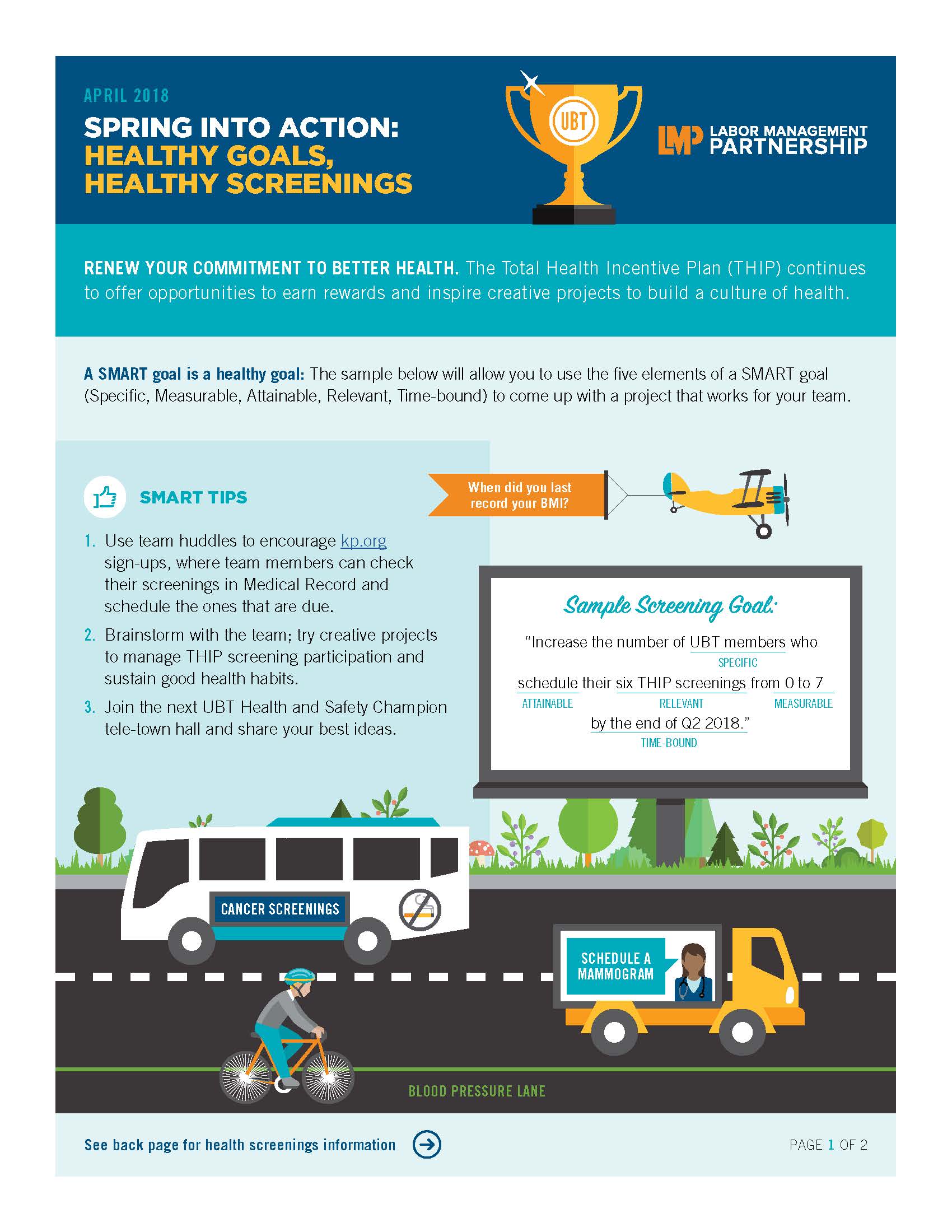
Health and Safety Champions—April 2018 Focus

Format:
PDF

Size:
One page, two sides, 8.5" x 11"

Intended audience:
UBT health and safety champions

Best used:
Use this tool to encourage UBT members to stay up to date on their recommended health screenings.

Related tools:

TOOLS

Consensus Decision Making Continuum

Format:
PDF and PPT slide

Size:
8.5" x 11"

Intended audience:
Leaders at any level who need to articulate what process will be used to make a decision. 

Best used:
Hand out at meetings or use in presentations when discussing consensus decision making and interest based problem solving. 

You may also be interested in Interest-Based Problem Solving: A Step-by-Step Guide

Related tools:

eStore

back to eStore
Hank cover

Hank Q1-2018

Navigate the future with this issue of Hank, dedicated to the workforce of the future!

Get tips and tools to ensure you get the skills needed to provide the best care and service  and make work more satisfying  in the years to come. 

Minimum order: 25

eStore

back to eStore
Hank cover

Hank Q4-2017

Celebrate the 20th anniversary of the Labor Management Partnership. We are taking the high road, and there's no turning back!

Plus: Tips and tools for both rookie and veteran leaders of unit-based teams, as well as puzzles and games to mark our milestone. 

You can also visit the Q4-2017 Hank web page in the Gallery section to read the issue online or download a PDF of it. 


Minimum order: 25

TOOLS

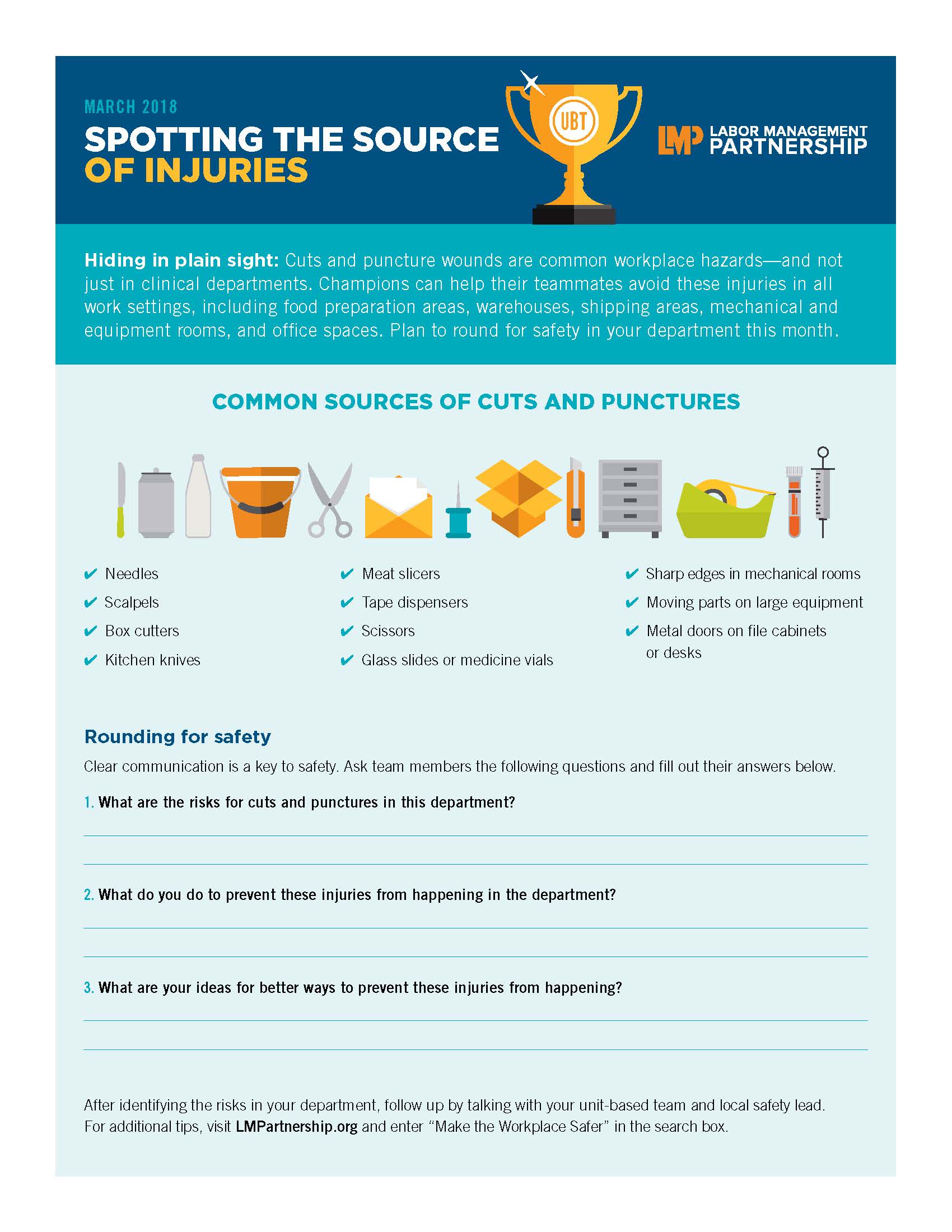
Health and Safety Champions—March 2018 Focus

Format:
PDF

Size:
8.5" x 11"

Intended audience:
UBT health and safety champions

Best used:
Use this tool to reduce the risk of cuts and puncture wounds in your team's workspace.

Related tools:

TOOLS

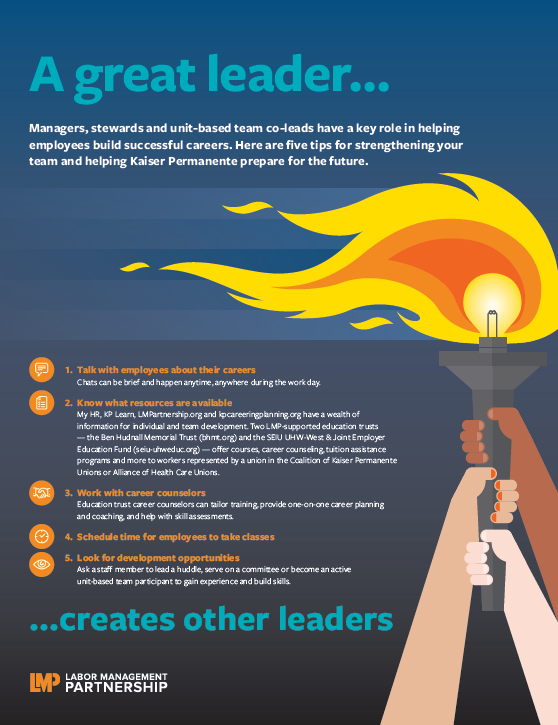
Poster: A Great Leader...Creates Other Leaders

Format:
PDF (color or black and white)

Size:
8.5" x 11"

Intended audience:
Frontline employees, managers and physicians. 

Best used:
Post on bulletin boards and hand out at unit-based team meetings to show how managers, union stewards and UBT co-leads can help employees navigate and prepare for the future at Kaiser Permanente. 

Related tools:

Pages

Subscribe to RSS - Program-wide